
Deeplex® HelP
Advanced Diagnostic Test
for Helicobacter pylori (H. pylori)
Infections and Antibiotic Resistance
Desarrollado por GenoScreen
Be among the first to experience our next-generation H. pylori resistance testing kit. Join as an early user today.
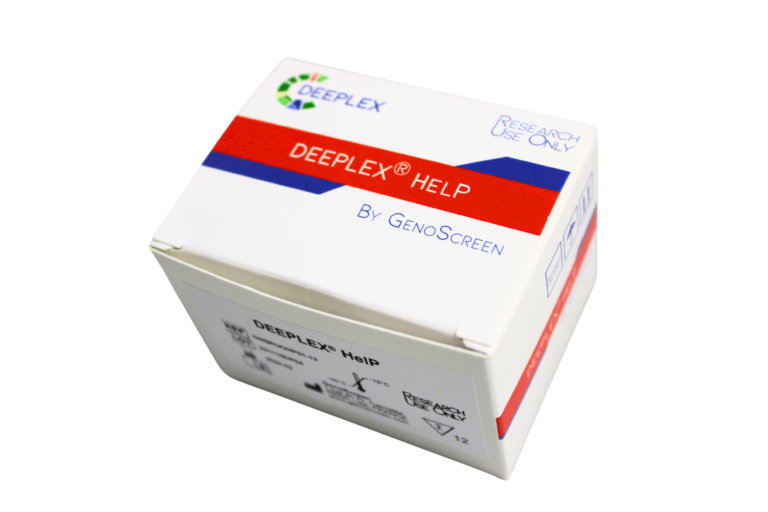
Deeplex HelP: H. pylori resistance diagnostic solution
6
antibióticos
Proyectado*
7
genes for strain typing
2
genes for virulence prediction
48h
de las muestras clínicas a los resultados
*Clarithromycin, levofloxacin, rifampicin, tetracycline + exploratory variant detection in genes associated with metronidazole, amoxicillin resistance.
Componentes clave de
Deeplex HelP
- Deeplex Master Mix: a single PCR mix for amplifying H. pylori gene regions involved in antibiotic resistance, strain typing, and virulence factor genotyping.
- Control interno para el control de calidad en la muestra.
- Control positivo para la validación de la prueba.
- Automated analysis via GenoScreen proprietary automated bioinformatics pipeline for fast and secure data interpretation.
Descargar la nota técnica
H. pylori and antibiotic resistance: a global threat
H. pylori infection is a major global health concern, associated with gastritis, peptic ulcers, and gastric cancer. This bacterium affects approximately 50% of the world’s population, with prevalence varying by geographic region. The risk of developing H. pylori-related diseases depends on multiple factors, but global health authorities estimate that 660 million people (15%) will develop peptic ulcers, and 66 million (1.5%) will develop stomach cancer.
Antibiotic resistance is a major cause of H. pylori treatment failure. The World Health Organization has highlighted H. pylori as a priority antibiotic-resistant pathogen, underscoring the need for improved diagnostic and treatment strategies. Clinical guidelines recommend tailoring therapy based on local antibiotic resistance prevalence. However, such data may be limited or outdated in many settings.
Deeplex HelP enables direct genotypic resistance profiling from patient samples, supporting a more personalized approach to H. pylori treatment.
How Deeplex HelP makes a difference
Deeplex HelP is a cutting-edge molecular assay designed to predict H. pylori antibiotic resistance. By combining strain typing, genotyping of virulence factors, and resistance prediction in a single test, Deeplex HelP empowers clinicians to make faster, more targeted treatment decisions – improving outcomes and supporting efforts to combat targeted antimicrobial resistance.
Key benefits of Deeplex HelP
- Comprehensive insights into H. pylori strain type, virulence markers, and predicted resistance to key antibiotics
- Culture-free workflow – no need for bacterial culture or lengthy laboratory procedures
- Streamlined, single assay enabling personalized, resistance-guided therapy
- Supports more effective treatment strategies, with the potential to improve eradication rates and reduce complications such as gastric ulcers and gastric cancer
Prevent gastric inflammation and ulcers
The pathogenicity and treatability of H. pylori depend on a complex interplay of factors, particularly bacterial strain identity, virulence, and antibiotic resistance. Current diagnostic methods – including PCR, LPA, and culture – are either limited in scope or impractical due to their complexity, slow turnaround, and inability to detect all clinically relevant resistance and virulence markers.
Deeplex HelP is a culture-free, targeted deep sequencing assay that simultaneously provides strain typing, virulence profiling, and antibiotic resistance prediction. This comprehensive approach enables clinicians to guide therapy more effectively, reducing the risk of treatment failure and long-term complications such as gastric cancer.


Indicaciones y aplicaciones
Deeplex HelP supports a wide range of clinical and research settings where accurate H. pylori resistance insights are essential:
- Gastroenterology clinics – guide treatment decisions in patients with H. pylori-related conditions
- Clinical microbiology laboratories – implement a rapid, culture-free approach to antibiotic resistance prediction
- Unidades de enfermedades infecciosas: aplicar terapias dirigidas y reforzar la administración de antimicrobianos
- Programas de vigilancia de la salud pública: seguimiento de las tendencias de resistencia e información sobre las intervenciones a nivel de población.
- Pharmaceutical and clinical research teams – evaluate treatment efficacy and investigate H. pylori resistance mechanisms
Preguntas y respuestas
¿Por qué es importante el H. pylori a nivel mundial?
H. pylori infects nearly half the world’s population, making it one of the most common bacterial infections.
While often silent, it’s a leading cause of peptic ulcers and is linked to serious diseases like gastric cancer and MALT lymphoma.
Recognized as a Group 1 carcinogen by the International Agency for Research on Cancer, H. pylori is the top cause of infection-related cancers – responsible for over 750,000 new cases in 2018 alone.
¿Por qué fracasan hoy más a menudo los tratamientos contra el H. pylori?
Eradicating H. pylori can prevent serious diseases, including gastric cancer – but treatment isn’t as effective as it used to be.
One major reason is antibiotic resistance. Over the past two decades, resistance to key drugs like clarithromycin and metronidazole has surged, with failure rates rising accordingly. In Europe, up to 30% of patients are now resistant to common first-line antibiotics, even if they’ve never been treated before.
This growing resistance makes it harder to rely on a one-size-fits-all treatment – and underscores the need for more personalized approaches.
¿Es posible realizar pruebas de resistencia antes de iniciar el tratamiento?
Yes – but current methods have limitations.
Las pruebas basadas en cultivos son la regla de oro, pero son lentas, técnicamente exigentes y no suelen estar disponibles.
Molecular methods are faster and more widely used, but typically focus on detecting H. pylori and resistance to a single antibiotic – usually clarithromycin. Even then, they often analyze only a limited set of mutations, which may miss emerging or less common variants.
As a result, many patients are still treated empirically – without knowing whether the treatment will actually work.
¿Qué diferencia a Deeplex HelP?
Deeplex HelP goes beyond conventional diagnostics. It uses targeted next-generation sequencing (NGS) to provide a full resistance profile directly from gastric biopsy samples – no need for culture.
It detects resistance to multiple antibiotics, including clarithromycin, levofloxacin, tetracycline, and rifampicin, with additional insights into metronidazole and amoxicillin.
La prueba también capta los factores de virulencia y la información sobre las cepas, lo que ofrece una imagen completa en un solo ensayo.
¿Es Deeplex HelP lo suficientemente rápido para la toma de decisiones clínicas?
Absolutely. Deeplex HelP is designed for in-house use and delivers results within 48 hours from sample to report.
The streamlined process – combining a single-tube multiplex PCR with automated analysis – makes it both time-efficient and lab-friendly.
Los resultados se presentan en un informe interactivo de fácil lectura que permite tomar decisiones de tratamiento rápidas y fundamentadas.
¿Puede Deeplex HelP apoyar los esfuerzos de salud pública y vigilancia?
Sí.
In addition to guiding individual treatment, Deeplex HelP provides valuable data for epidemiological tracking and antimicrobial resistance monitoring. It identifies H. pylori strain types and virulence markers – supporting both clinical care and population-level strategies.